
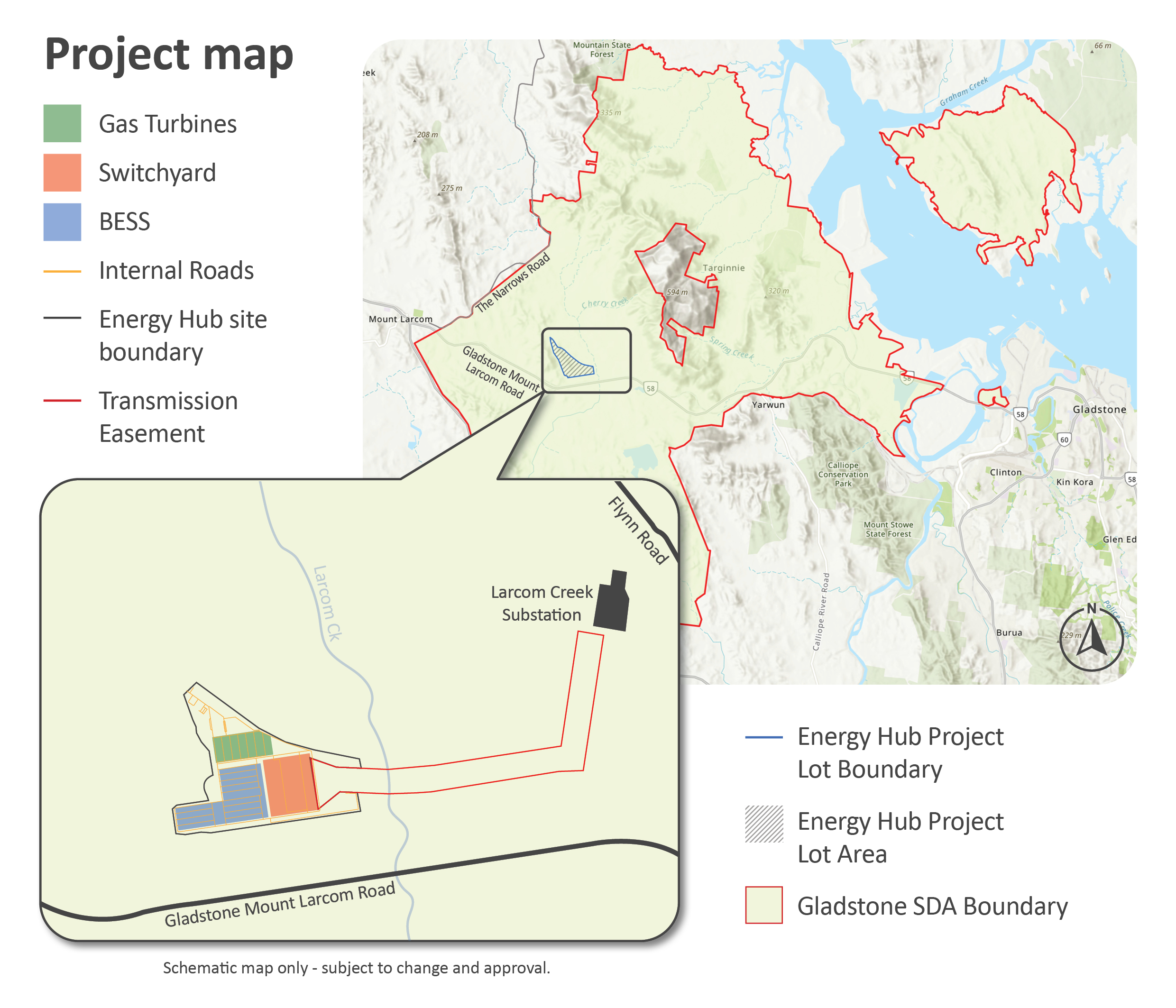
Private Energy Partners is proposing to build an Energy Hub, within the Gladstone State Development Area (SDA). The project, located 7km from Mount Larcom and 25km from Gladstone, is a multi-technology solution consisting of gas turbines and a Battery Energy Storage System (BESS). The Energy Hub would combine energy generation and energy storage.
The project is planned to be delivered in three stages. At full capacity, it would be able to generate about 1080 megawatts (MW) of gas via the gas turbines, and store and dispatch about 780 MW via the BESS.
The project would support network reliability by supplying dispatchable energy to stabilise power supply during times of high demand, low generation and unplanned outages. The Energy Hub would supply existing Gladstone industry and support new industry in the area.
The Energy Hub would be operational for about 25 years, with a potential 25-year extension after a facility overhaul. This would create local jobs and contracting opportunities for the people of Mount Larcom and surrounding communities for years to come.
Information about gas turbines
The open-cycle gas turbines would support the Gladstone region by delivering reliable gas-generated power to homes, businesses and local industry.
This type of generation is a highly responsive, efficient and flexible energy solution, capable of being activated and deactivated quickly to meet changing power network demands.
Gas turbines can also operate for multiple days to support demand during periods of low power supply to the network.
The project is still in the design phase. We will continue to provide updates as the design progresses, including details about the number and height of the turbines.
Subject to the final design, the project intends to use natural gas from existing nearby pipelines to power the turbines. The turbines could also run on alternative fuel sources.
The energy generated by the turbines could be supplied directly to the grid via high voltage transmission lines connected to Powerlink’s Larcom Creek Substation.
Information about BESS
We plan to build the BESS in three stages and at full capacity it would be able to store about 780 MW for eight hours. This energy can be released back into the grid during times of low supply or high demand, helping reduce electricity waste and maintain a more efficient, secure and reliable energy system.
BESS system components
The BESS would use industry standard grid-scale Lithium Iron Phosphate (LFP) batteries, one of the safest options for large-scale energy storage. LFP batteries safely operate across a wider temperature range and store more energy per unit than other batteries. This makes them ideal for safely storing large amounts of electricity for quick release when the network needs it.
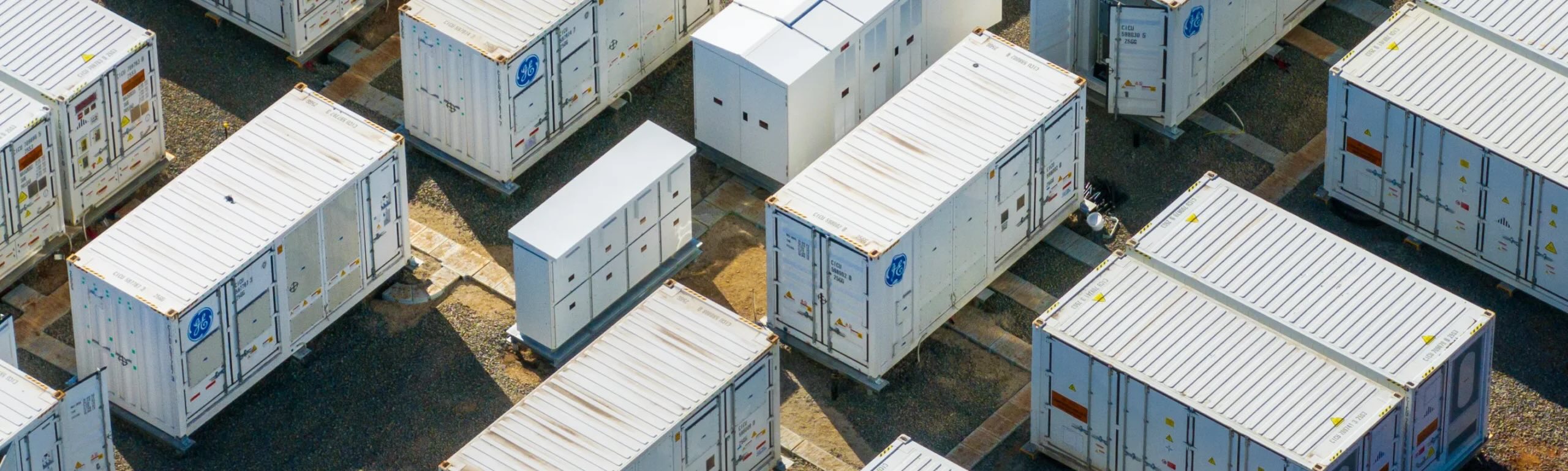
These LFP battery cells would be arranged inside modules, which would be stored in racks, similar to cabinets. Several racks would be installed within shipping containers. A Battery Management System would prepare the energy for release into the grid when it is needed, converting stored Direct Current (DC) energy into Alternating Current (AC) energy, and adjusting voltage levels as required. These batteries are different to the Lithium-ion batteries used in mobile phones and electric bikes.